
Compost · Houston
Casco Compost
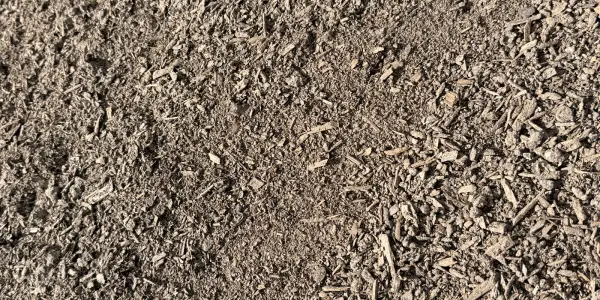
Small-batch compost made from wood shavings, animal manure, and food waste brought in by collection companies, held for months and screened to half-inch minus.
$60 per cubic yard
Retail price at the yard, before tax.
Pick up at the yard, or we deliver around Houston. Delivery details · Contractor accounts
The material
What it is
Casco Compost has three inputs: wood shavings, animal manure, and food waste. It composts for months and is screened to half-inch minus, which means everything half an inch or smaller passes the screen. The fine texture works into existing soil easily, so it suits vegetable gardens, raised beds, flower beds, and general soil amendment.
The manure is horse manure from stables around Houston and rodeo manure. We take it in ourselves.
The food waste is fruit, vegetable, meat, and dairy, brought in by food waste collection companies. Taking meat and dairy moves a Texas composting facility into a regulated tier, so we are registered with TCEQ under the notification tier.
Process
How we make it
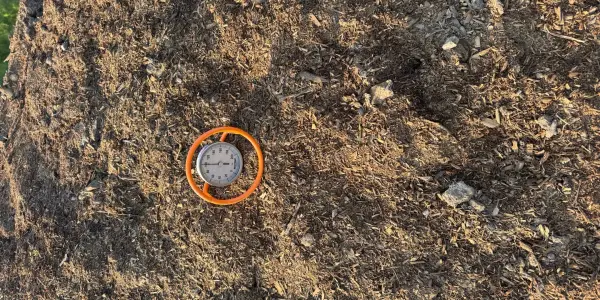
We compost in windrows, then move the material to static curing piles and let it finish. While it cooks, each windrow is kept between 130 and 160 F and turned when it drifts out of that range. Incoming raw food waste is dumped onto a pad of animal bedding, covered, mixed, and pushed into a pile, then capped with more animal bedding, which is what keeps the smell down.
Ours is small batch. A large producer takes in so much feedstock that windrows have to be turned and pushed off the pad to make room for the next load, sometimes before the material has finished cooking. We cook ours out in the windrows, move it to static curing piles, and let it finish mellowing before it is used.
The state minimum for pathogen kill in windrow composting is 15 days at 131 F with five turnings. We hold material for months, and some products for years. Before a section is pulled, we run a Solvita test on it, and it passes when carbon dioxide reads low and ammonia reads at the bottom of the scale. Then we screen it through the trommel to half-inch minus. The oversize comes out and the finished compost goes through.
Everything in it is recycled. The wood shavings, the manure, and the food waste all come from around Houston and would otherwise be thrown away. We take them in, compost them, and sell the result back into the same area.
"We take the animal bedding and make a pad for the food waste guys to dump the raw food waste on top. We cover it up, mix it, and push it into a pile. We cover it with more animal bedding in order to cap it and keep the odors down."
Mike Conner, Director of Operations, Organics Division, Casco Organics
Uses
Best for
- Enriching vegetable gardens and raised beds
- Flower beds and perennial borders
- General soil amendment before planting
- Building or refreshing soil structure and water retention
Good to know
Finished compost smells like soil, not ammonia
Not all compost is finished when it is sold. Compost sometimes moves before it is done because the producer needs the space. Uncured compost can burn plants, tie up nitrogen so new growth yellows, or carry salt injury.
You can judge compost on sight and smell. Finished compost smells like earth or soil. A sour, vinegar, ammonia, or sulfur smell means the material is still fermenting or was pushed out too young. Product that is hot at the point of sale is still actively composting.
Ask what went into it. A yard that makes its own compost can name every input. Ours is wood shavings, animal manure, and food waste brought in by collection companies, and nothing else.
Ask how the yard knows it is finished. Ours is tested with a Solvita test, one section at a time, before it is pulled.
Questions about Casco Compost
Wood shavings, animal manure, and food waste. The manure is horse manure from area stables and rodeo manure. The food waste is fruit, vegetable, meat, and dairy. It is screened to half-inch minus.
Food waste collection companies bring it in. It is fruit, vegetable, meat, and dairy, and we compost it here. Taking meat and dairy moves a Texas operation into a regulated tier, so we are registered with TCEQ under the notification tier.
Longer than the state minimum. The state minimum for pathogen kill in windrow composting is 15 days at 131 F with five turnings. We hold material for months, and some products for years.
We test it. Before each section is pulled we run a Solvita compost maturity test. One paddle reads carbon dioxide and the other reads ammonia. Finished compost gives off little of either, so the carbon dioxide paddle turns purple and the ammonia paddle turns yellow, a 5. Compost that is still breaking down gives off more of both, and that is the compost that burns plants and ties up nitrogen.
Casco is registered with TCEQ under the notification tier. Neighbors were notified, nobody objected, and TCEQ cleared the yard to compost.
It adds organic matter. The wood shavings make it a carbon-rich compost, so its main work is building soil structure and holding water. It also does more than feed the life already in the soil. Finished compost carries active microbes of its own, so it adds microbial activity too. It is cured until it is stable, which means it will not heat back up once it is in the bed, and it is low enough in soluble salts to work in around new plantings.
Keep going
Related
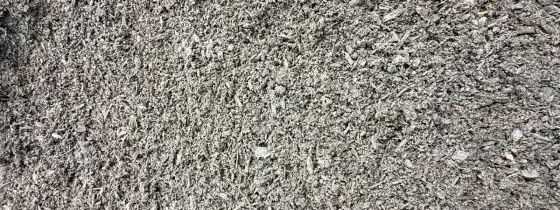
Garden Mix
Our compost, our humus, and sand. Built for beds and containers.
$37 per cubic yardView product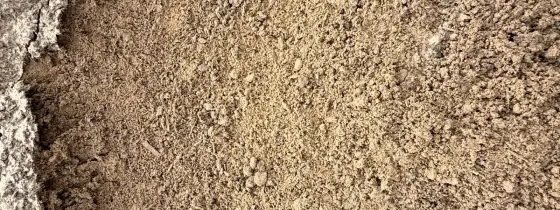
Lawn Mix
Our own loamy sand, compost, and humus for sod, seed, and topdressing.
$36 per cubic yardView product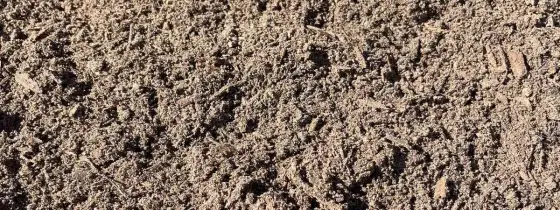
Compost-enriched soil vs. topsoil
Why plain topsoil runs short on organic matter, and what compost adds.
Read the guide