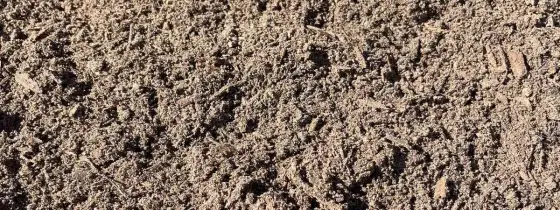
Soil in Houston
Topsoil has no standard definition. Three things decide whether a lawn or a bed establishes: soil structure, organic matter, and whether the compost in the blend is finished.
"Topsoil" is not a specification
Topsoil has no legal definition and no marketing standard. The extension services that have looked at it put it plainly: technically, topsoil is whatever soil is on the surface. Fill dirt full of clay chunks, rock, and weed seed is sold under that name every day, and nothing stops it.
Texture is the part you cannot fix later. You can amend pH and add nutrients after the fact. You cannot practically change a soil's texture once it is spread and graded.
What you are starting with in Houston
Houston's clay-heavy soil compacts, and compacted soil restricts root growth and water absorption. That is the condition most beds and lawns here start from, and it is why the fix is almost always structure and organic matter rather than more dirt.
How the names work: loamy sand, sandy loam, and the three sands
Soil names are read back to front. The second word is the main component and the first word describes it. Loamy sand is sand with a lot of loam in it. Sandy loam is more loam than sand. The two names sit close together and the materials are not interchangeable.
Three different sands come off this yard, and each one has a job. Humus and Casco Compost are the other two materials that go into the blends.
- Bank sand. Straight sand out of our own pits on the property, run through a trommel so the chunks of clay come out. It is fill: grade, drainage, and a base under soil or turf.
- Loamy sand. The lighter soil sand, screened to half-inch minus. It drains and aerates, and it is the base of Lawn Mix.
- Sandy loam. The darker brown, traditional-looking topsoil, dug on the property and screened to half-inch minus. We sell it on its own as Screened Sandy Loam Topsoil, and it is the base of Tree & Shrub Mix.
- Humus. As Stephen Flowers puts it, "the fine broken-down organic matter that makes up soil." It is what turns a sand into a soil, and it is in all three blends.
- Casco Compost. The biology and the nutrient store. It is made here from wood shavings, animal manure and food waste, composted in windrows, cured in static piles and held for months.
Sand, plain topsoil, or a compost-enriched blend
Use sand when the job is grade, not growth. Raising a low area, filling a hole, building a base under a soil layer: that is a sand job. Compost in it gets buried and does nothing.
Use a plain screened topsoil when you need volume of a known texture and the existing biology is fine. Backfilling, general grading, or filling a raised bed you intend to amend yourself.
Use a compost-enriched blend when something has to grow in it. Plain topsoil does not hold moisture well, has poor structure, and its nutrients leach away with every rain and every irrigation cycle. Compost mixed into it improves moisture retention and structure, and it stores nutrients so they are there when the plant needs them.
Leveling is the one people get wrong. Compost is nutrition and moisture, and it will not hold a grade. A sand-based blend adds the physical structure that smooths and stabilizes an uneven lawn.
What is in each blend, and which one is for what
Components are listed largest share first. We do not publish percentages.
- Lawn Mix: loamy sand, Casco Compost, humus. For seeding, laying sod, topdressing, and leveling low spots. The heaviest blend we make, which limits what can ride with it on a split load.
- Garden Mix: Casco Compost, humus, sand. No topsoil in it. Built as a hybrid that works in the ground or in containers, so it suits raised vegetable and flower beds and enriching a bed you already have.
- Tree & Shrub Mix: sandy loam topsoil, Casco Compost, humus. Built so shrubs get stability and a good root system into the ground. Most shrubs are hardy and do well in it. It is not for delicate flowering plants.
- Screened Sandy Loam Topsoil: straight topsoil dug on the property and screened to half-inch minus. Not a blend. A lab classified it as a sandy loam, which is where the name comes from. For bed fill, topdressing, leveling, and general grade work.
What to check before you buy soil
Our products page carries the five questions to ask anyone selling landscape material. Two of them matter more on soil than on anything else, so they are worth spelling out here.
Ask where the manure came from and what the animals were fed. Picloram, clopyralid, and aminopyralid pass through livestock into manure and survive composting for years. The symptom in a garden is twisted, cupped, elongated leaves and dead seedlings, and tomatoes, beans, and peppers are the most sensitive.
What uncured compost does once it is in the ground: ammonia burn, bleached leaves from organic acids, nitrogen immobilization showing up as yellow, slow new growth, and salt injury, which Washington State Extension calls the most frequent cause of compost problems.